

How To Draw Serious Adult Manga
How to create an accurate manga comic strip
While the style and stop of manga art is relatively minimalist in comparing to other types of comics, this credible simplicity is deceptive. Every line is a choice made past the creative person – the thinking is to never use 10 strokes to depict something if just a single, well-placed line would suffice.
This principle of concentrating on the essentials permeates throughout manga art creation. Every panel is an exercise in option: size, zoom, camera bending, spoken communication bubble positioning, and type of background. Every page works every bit a whole to command the reader'due south experience, specially in pacing.
Read on for 15 tips to help you create an accurate manga comic strip, and also don't miss our post on how to draw manga characters.
01. Pace yourself
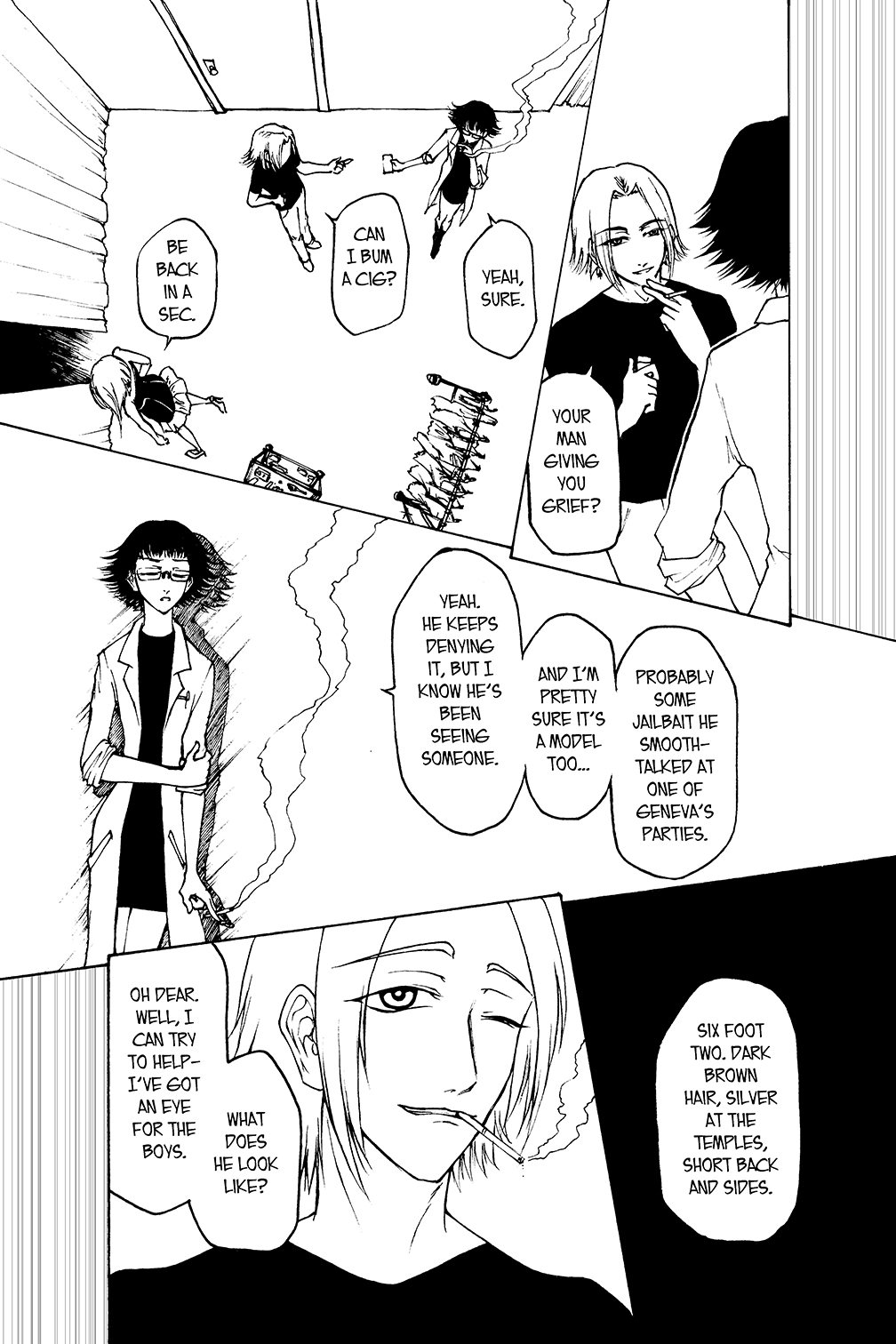
When you're writing for manga, remember it flows faster and sparser than other types of comics. It spreads across more than pages with fewer panels per folio. At that place is variation between the types of manga; Seinen manga, aimed at developed males, will be more densely packed than Shoujo manga, which is normally read past young girls. Simply as a guide, aim for a maximum of three speech bubbles per panel, an average of five panels per page, and around four pages per scene.
02. Consider your reading direction

Manga originates from Japan, and Japanese traditionally reads vertically from top-to-lesser before going right-to-left. And so for any manga originally published in Japanese, you start reading from the top right corner and cease in the bottom left. If information technology's been translated into English, yous'll often find information technology remains this fashion. Simply if you lot're writing in English from the get-go, there's no need to do this, so information technology'southward upwardly to you lot! Make up one's mind on your reading management and stick to it.
03. Group your panels
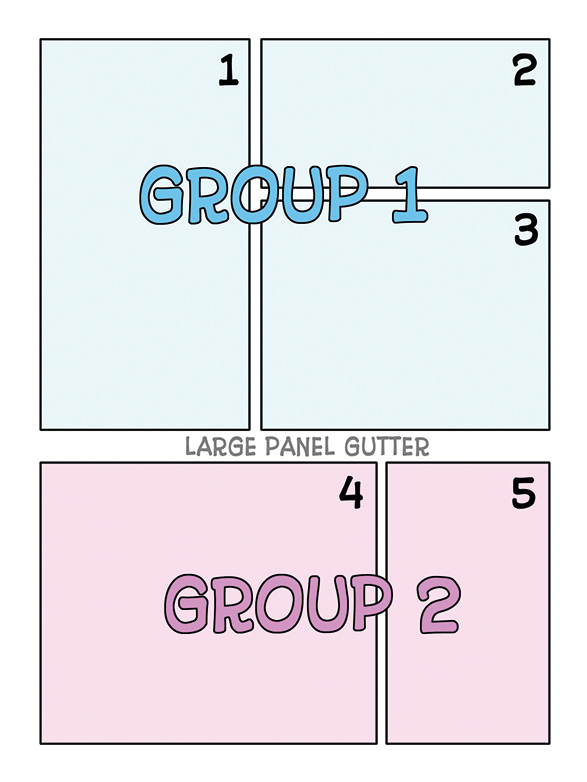
Most manga comics have panels of different sizes and shapes that change from page to page. There are no arrows or numbering to guide the reader, then you must group the panels conspicuously to make it obvious they must read one agglomeration of panels before moving on. Separate ane group from another by increasing the space betwixt the panels (the panel gutter). And so brand certain that any pocket-size panel gutters within a grouping don't line up with any panel gutters in some other group.
04. Explore abstract layouts
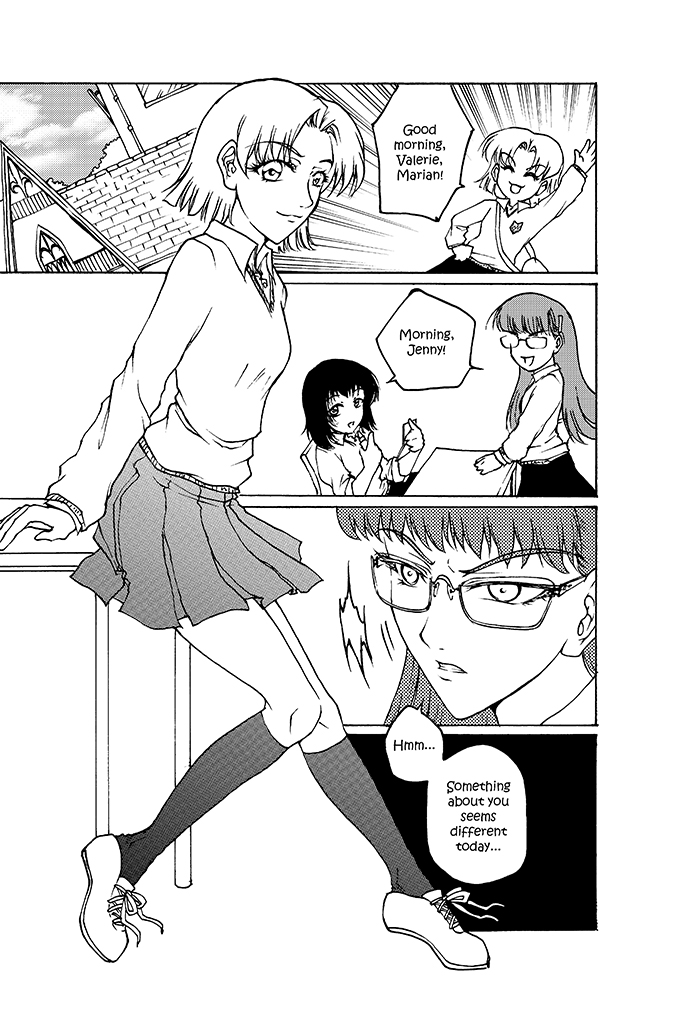
Manga doesn't simply stick to traditional boxes in rows. It often employs dynamic panel layouts that stretch across the tiptop or width of the whole page, along with diagonal lines and irregular shapes. Sometimes boxes aren't even used at all, with hazy patterns used as outlines, or the graphic symbol breaks out of the panel. Panels can even fade in and out every bit function of the storytelling.
The difficulty is ensuring that regardless of layout, the panel society remains clear. Try reading some manga to find lots more than examples to play with.
05. Showcase different viewpoints
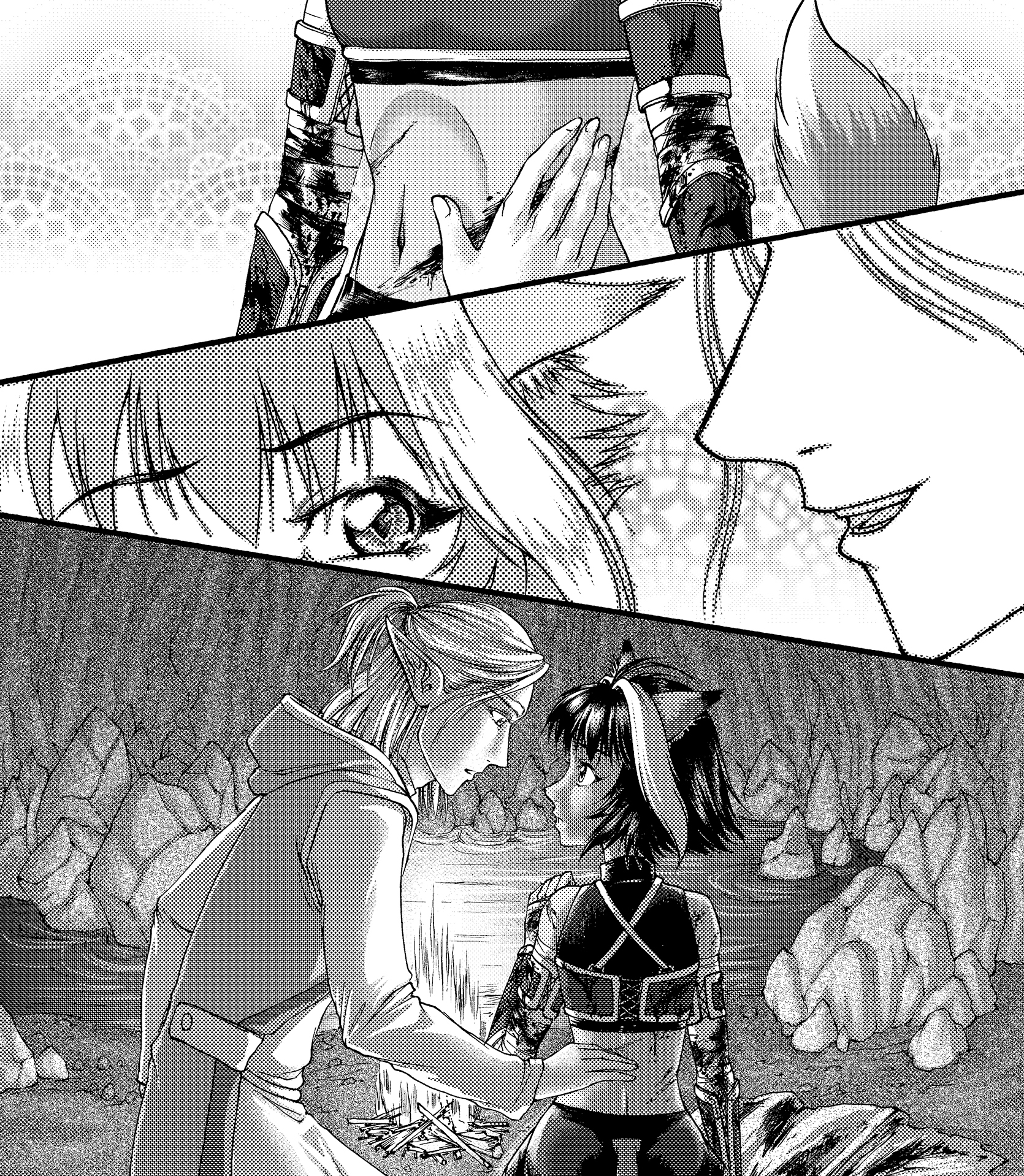
Manga is known for its cinematic experience. Every panel is like an action movie, where the photographic camera cuts from a close-up of optics, to a two-shot profile of a conversation, to a bird's-center view of the characters, then a low-to-high angle as a stiletto heel clicks onto the floor. Really brand an effort to showcase dissimilar camera angles and zooms in your story.
06. Go far dynamic
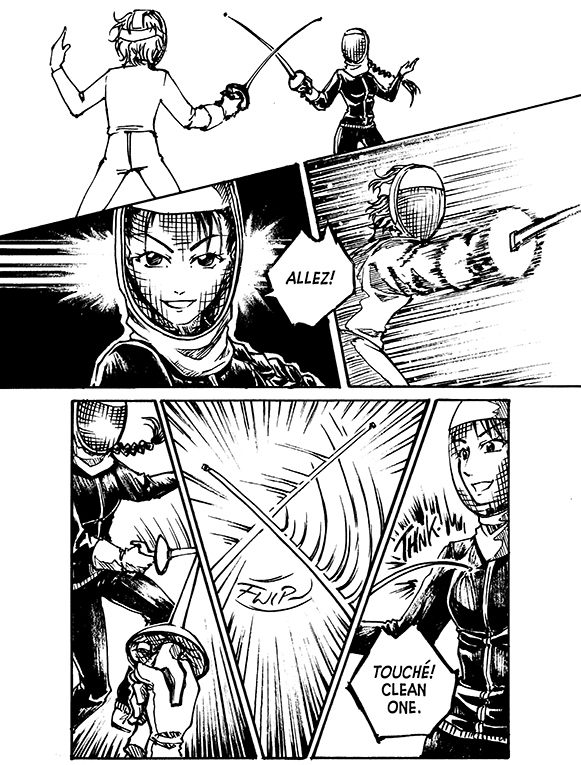
Manga is a dynamic form of storytelling; when a character is in a total-blown fight, they really look like as though they're moving, even flying out of the page. Unlike superhero comics that have fully inked characters and points of impact, manga favours limbs that blur with motion, backgrounds that become speedlines, channelling and enhancing the direction of the movement and highlighting the point of bear on with accent lines originating from it. Almost of this is washed through inking, simply can be washed with screentone, too.
07. Lucifer groundwork to mood
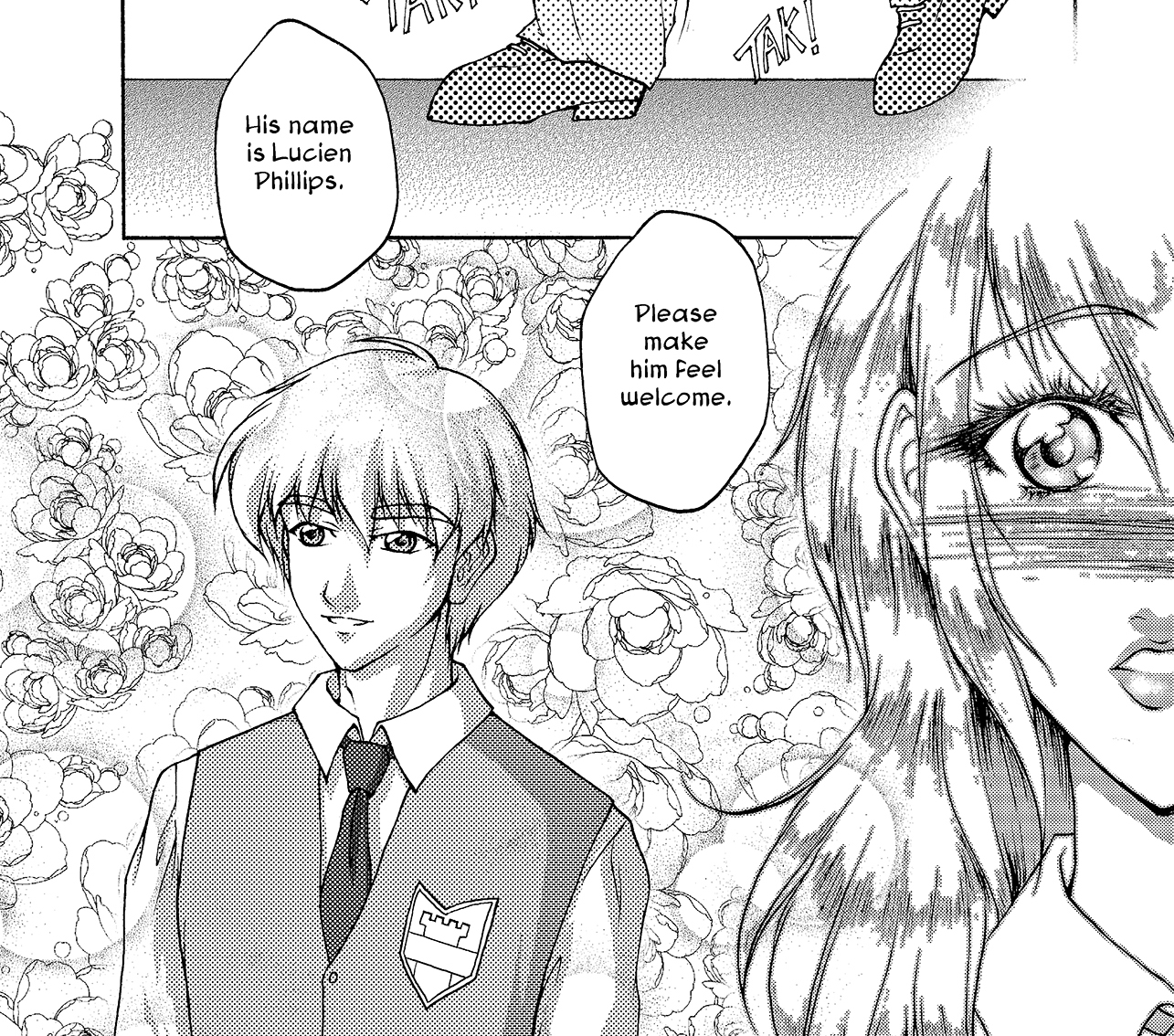
One key divergence between manga and other types of comic is the use of abstruse backgrounds to match the temper and the emotions of the characters. Once the scene has had an establishing shot of the concrete environs, the backgrounds can exist anything: lacework and flowers to signify a budding romance; flames if someone is full of burning rage; blackness shadows and swirling knots to convey inner turmoil; or cookies and cakes when a character is irresistibly cute! This is particularly pop in Shoujo and Josei manga, which is aimed at girls and women.
08. Don't rely on speech chimera tails
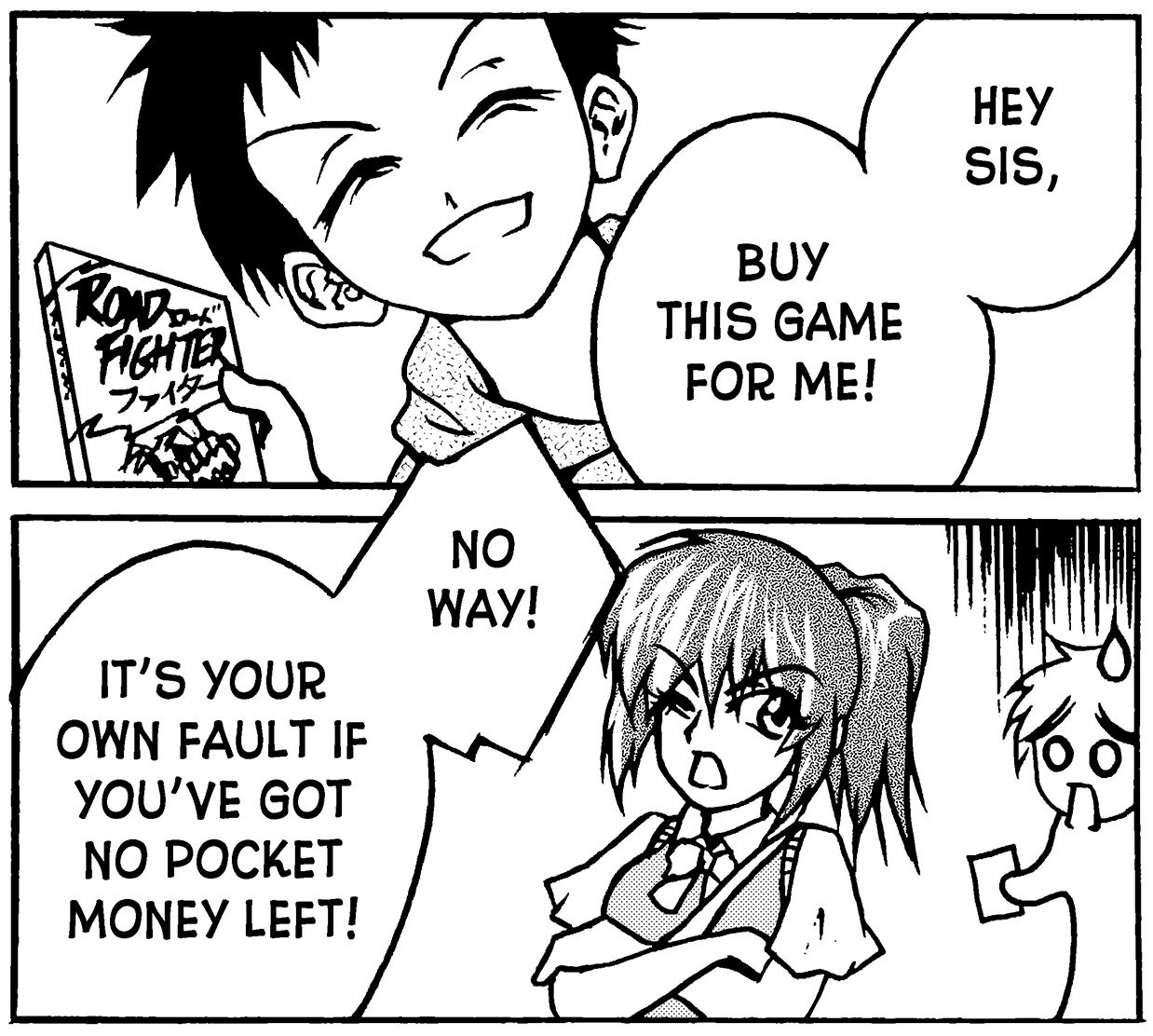
Japanese people traditionally read tiptop-to-bottom and and then right-to-left. To accommodate this, manga spoken communication bubbles are much taller than in Western comics. They're also roomy, with lots of infinite around the lettering. Another primal feature is the tails denoting the speaker – these are either very small or not-existent. Rather than relying on tails, the speech bubbling are positioned near the speaker's head – use those camera angles wisely! Japanese dialogue also tends to make it clear who's speaking, due to special verb endings and slang.
09. Get creative with your speech communication bubbles
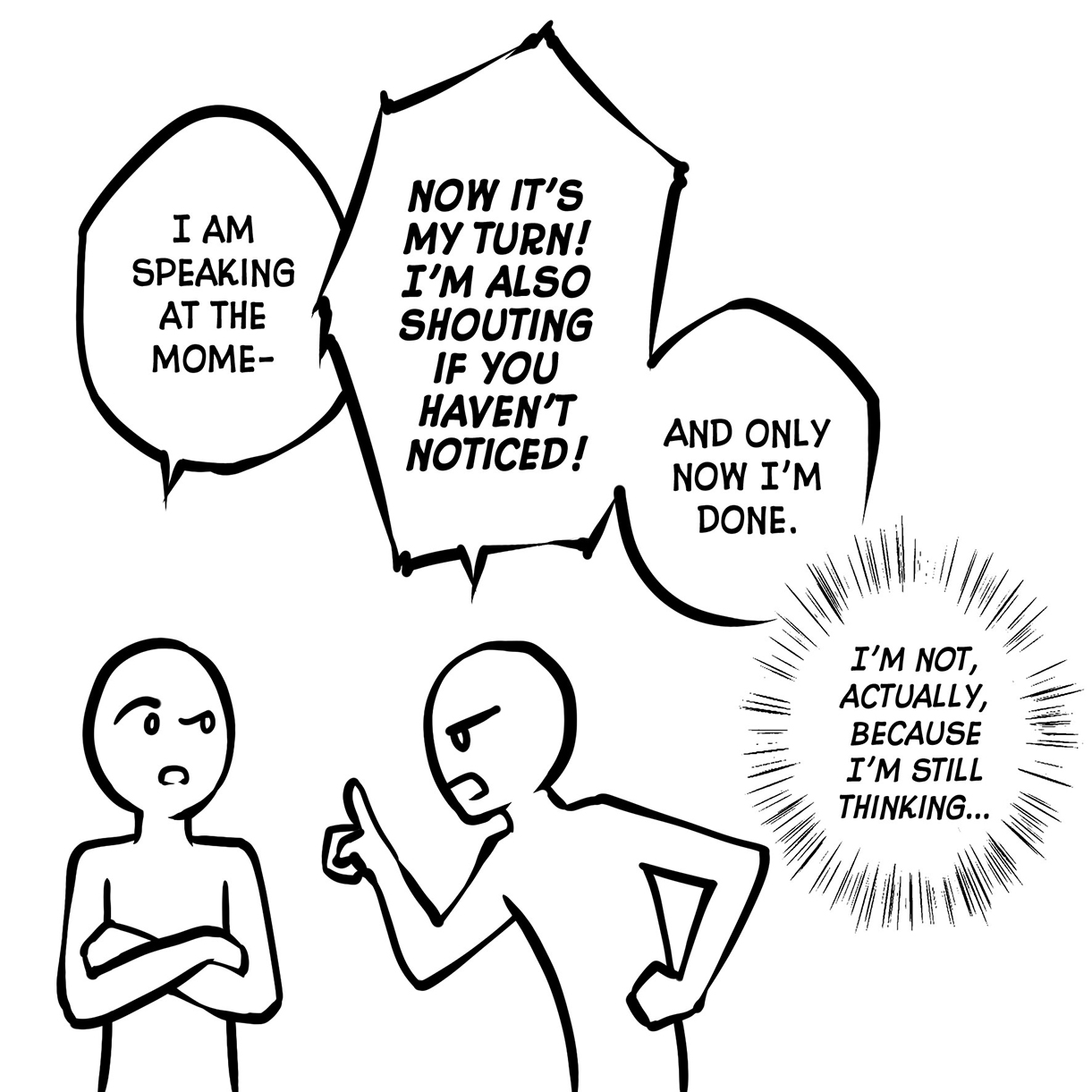
Spoken language bubbles in manga are a lot more organic than in other types of comics. They're near always hand-drawn and slightly irregular in shape. Joined speech bubbles are combined rather than linked by a sparse line. When one graphic symbol talks over another, information technology's depicted literally, with each oral communication bubble overlapping. While shouting is depicted with a more conventional spiky outline, thought bubbles aren't fatigued as clouds; more oftentimes they're surrounded by a haze, either drawn or made out of screen tone.
10. Employ screentone
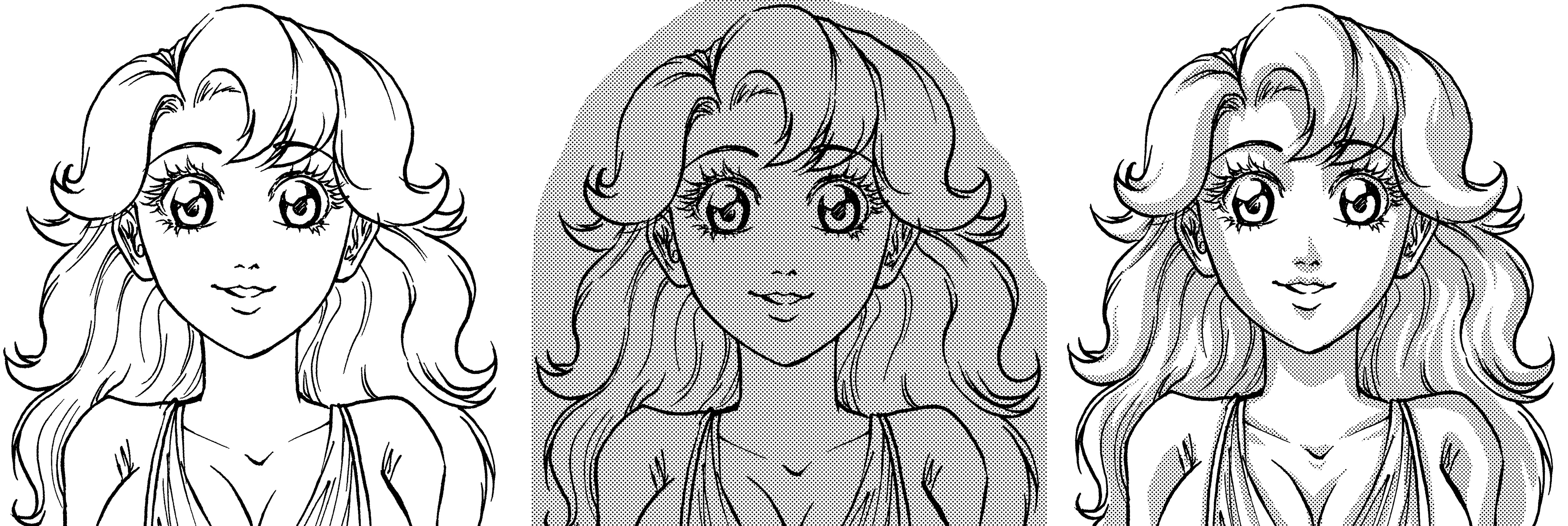
Manga uses screentone as its blackness and white. To practice this, start by preparing your line art – it has to exist in pure black and white without whatsoever greys, so scan at a minimum of 600dpi. Then threshold-to-catechumen every pixel into either blackness or white. The same must apply to your desired screentone: each pixel must exist blackness or white/transparent.
Copy then paste the screentone on a layer above the line fine art, plenty to embrace the lines and more. If your screentone isn't transparent, for case, on a white background, and so set the layer to Multiply so you can see the lines underneath.
Finally, remove unwanted areas of the screentone. There are many ways to exercise this: yous can select with a Lasso/Magic Wand tool and cut, employ the Eraser in Pencil way, or use a Layer Mask with a hard-edged brush so that no greys are introduced.
Next page: five more tips for creating an authentic manga comic strip
Related articles

Source: https://www.creativebloq.com/how-to/how-to-create-a-manga-comic-strip
Posted by: mayoincents1958.blogspot.com
0 Response to "How To Draw Serious Adult Manga"
Post a Comment