

How To Export For Youtube In Premiere Pro
Making YouTube videos for your business organization tin be tiresome. The job is definitely easier when you employ the right equipment, including video editing software such as Adobe Premiere Pro. Premiere makes it easy to fine-tune every part of the video to perfection. Later on you've edited, though, you nonetheless accept the work of exporting ahead of you- and it can become pretty technical.
This guide to export settings for Premiere Pro will teach you lot everything you lot need to know about taking your videos out of the editing software and getting them onto YouTube with the all-time quality!
What are the Best Premiere Pro Export Settings for YouTube?
We'll get into the nitty-gritty of export settings further down. If you already know a decent scrap about exporting video with Premiere, you can apply this table as a reference. The all-time export settings for 720P, 1080P HD, and 4K video are as follows:
| Setting | 720p Video | 1080p HD Video | 4K UHD Video |
|---|---|---|---|
| Format | MP4 | MP4 | MP4 |
| Codec | H.264 | H.264 | H.264 |
| Frame Size | 1280 ten 720 | 1920 x 1080 | 3840 x 2160 |
| Frame Rate | As shot | Equally shot | Every bit shot |
| Target Bitrate | 5 | viii | 45 |
| Bitrate Encoding | CBR | CBR | CBR |
Premiere Consign Settings: Nuts and Key Terms
Now, information technology's time to dive into all the different consign settings inside Premiere Pro. If you take a grasp of what each setting pick means and how it tin modify the video's quality on YouTube, yous'll never have to guess your way through settings in Premiere again.
The Importance of Using Proper Export Settings
There are ii things to proceed in mind when selecting your export settings. The first is the properties of the video that you shot- frame rates, resolution, etc. Matching the consign settings to these backdrop volition ensure things expect as they should when you export.
The second are the settings that YouTube recommends. Sticking with these settings volition brand aid deliver your video in its best quality without huge file sizes.
What Happens if I Get It Wrong?
The good news is that the ramifications of using the wrong export settings in Premiere are pretty minor. You will still want to export once again with proper export settings; all we're maxim is that you don't need to panic if you accidentally used the wrong settings!
Here are some of the things that can happen if y'all use the wrong consign settings:
- The video file size will be too large and take forever to render/export, and even longer to upload to YouTube.
- YouTube will overly shrink the video to reduce the file size, resulting in a lower video quality.
- The video will look "choppy" or blurry considering the frame rate is incorrect.
- Premiere can crash if your figurer does non accept enough RAM or system resources
- In rare cases, YouTube will not accept the video if the file type or codec used isn't supported.
Again, none of these things will cause a complete disaster, and the easiest fix is but re-exporting the video with different settings. Nonetheless, using the best export settings the first time lets you export from Premiere and upload to YouTube without the headache!
Formats and Codecs
When you export the video from Premiere, you lot will need to choose a file format and a codec. These are two interlinked settings that guide Premiere Pro as it exports your video. For YouTube, the recommend file format is MP4. It'southward efficient and loftier-quality, letting you upload quickly without losing whatsoever resolution.
Codecs are a bit more complex; they draw the style Premiere Pro will shrink and decompress the video file. The more than efficient the codec, the higher the video quality afterwards export (without creating massive file sizes). The best codec for YouTube is H.264. It efficiently encodes and compresses the video into the MP4 video file. YouTube recommends that every video uses H.264 encoding, though it nevertheless accepts other types.
Frame Rates
The frame rate of your exported video is mainly dependent upon the frame rate used when yous recorded it. The photographic camera gear you used (check out our recommendations here) will let you select a frame rate; that frame charge per unit is the 1 you lot should utilise when exporting. Here are some of the virtually common frame rates:
- 24 FPS: in Premiere Pro and other programs, yous'll see it listed as "23.976", merely information technology's much easier to simply say 24. This is typically known as the 'cinematic' frame rate.
- 25 FPS: 25 fps is rare in N America. It's typically only used in Europe.
- 30 FPS: xxx fps (or technically 29.97) is traditionally used in Television set and brodcast.
- sixty FPS: 60 fps is more commonly used with esports and video games only is gaining use in regular video recordings. The higher frame rate will produce much smoother motility and a 'hyper-realistic' look.
Bitrate
Bitrate describes how much information (measured in bytes or kilobytes) is transferred in every 2d of video. The college the bitrate, the more data transfer, and the college the overall quality.
"Bitrate Encoding" is a setting that determines if the bitrate will remain abiding or adjust to complex segments of the video. CBR (constant bitrate) is ideal, as it keeps the video quality abiding and requires less work for Premiere Pro as information technology exports.
The just caveat in bitrate settings is that raising the bitrate too loftier increases the file size and can be too demanding for people'due south internet connections. The last affair you desire is to upload a video that buffers endlessly!
The all-time bitrate setting (the "Target Bitrate" in Premiere Pro) is usually viii-45 Mbps. This volition ensure that your video is of the highest quality without going overboard. For 720P and 1080P videos, stick with viii-12; 4K videos with college frame rates work meliorate with a target bitrate of 35-45.
Motion-picture show Resolution
Most people have a decent working knowledge of motion-picture show resolutions then we'll take a look at this from a YouTube-specific angle. Motion-picture show resolution describes the number of pixels used to display the video; the higher the number of pixels, the clearer and sharper the motion-picture show.
Your audience (with few exceptions) volition be watching the video in one of iii ways: either on their mobile phones, their computers, or increasingly on their TV. Your audition's viewing habits can help inform which picture resolution is best for your brand'south YouTube videos.
- 720P: This resolution, which was the standard for HD video before 1080P was adopted, looks excellent on phones but not on laptops or TVs. If your audience is heavily on mobile, you tin cut file sizes and upload times by shooting and exporting in 720P.
- 1080P: This is the standard for almost whatever video broadcast, whether information technology be YouTube, TV, or streaming apps. This resolution should be your default.
- 4K: Also called "UHD" or "Ultra-Hd." Information technology'south peachy for brands that are heavy on visuals but usually unnecessary otherwise. If your audition is watching on their phones, 4K will be overkill because at that place are no phones with 4K screens. Most phone screens can replicate a "UHD" experience, but the bodily number of pixels in the screen is far lower than 4K.
What is Encoding?
Encoding describes the process by which Premiere Pro volition take your edited video files, compress, and convert them to run across the standards you have laid out in your export settings. The important matter to call back about video encoding is that it can be a very complex task for Premiere (and your computer) to execute.
That means yous should practise everything you can to make your consign settings lucifer those of the settings you shot the video in: resolution, frame charge per unit, etc. Doing and then ensures that Premiere will have less work to do as it encodes and exports the video, saving yous fourth dimension and avoiding crashes.
How to Render and Consign Video from Premiere for YouTube
1. Set In/Out Points
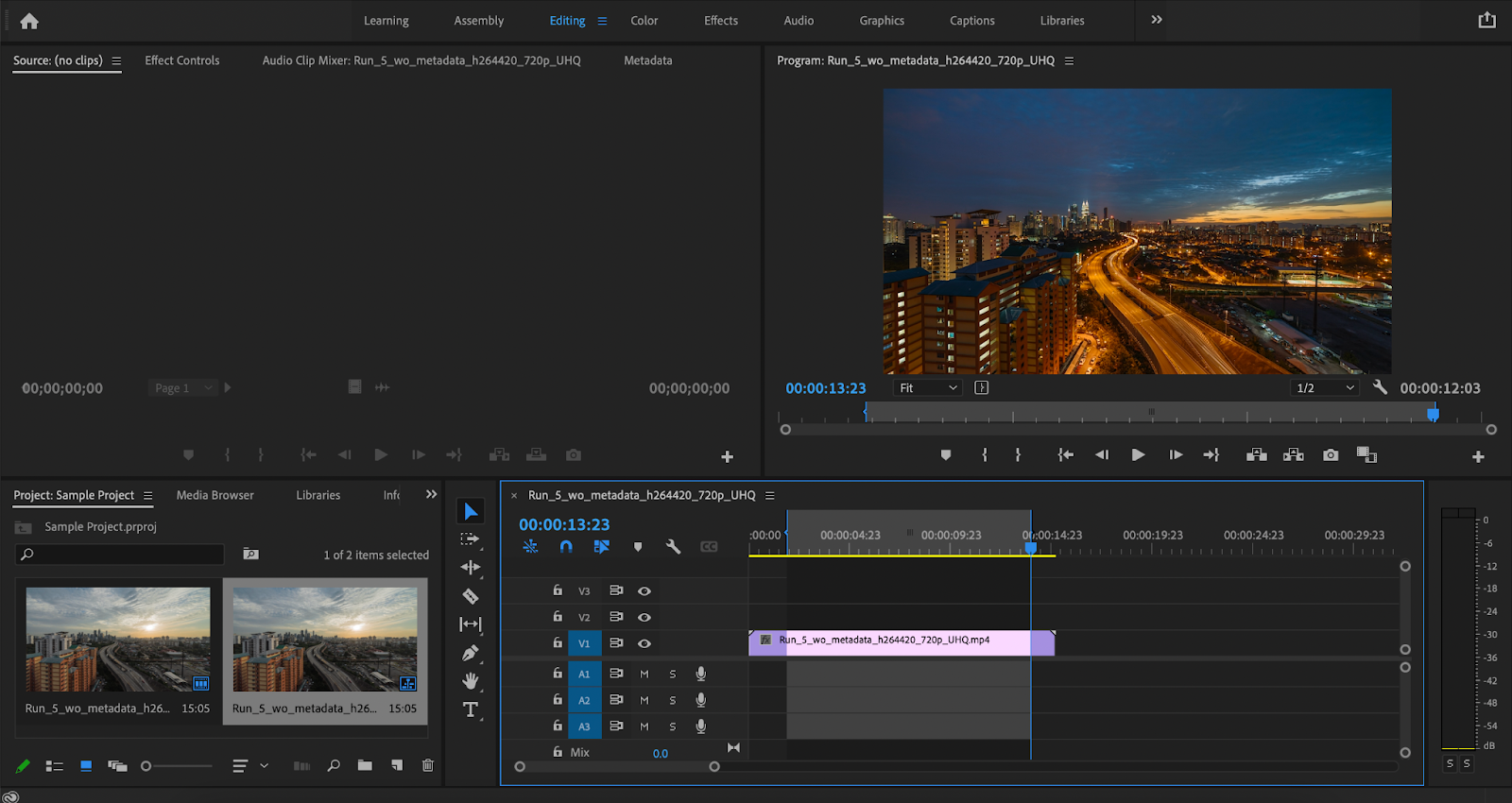
The offset matter you demand to practice is set up in and out points for your video. Forgetting to exercise this is a simple mistake that can cost you lots of time. Move the playhead to the exact indicate where you'd like the video to brainstorm and press "I." Then, do the aforementioned affair with the video'south endpoint, but printing "O." You'll run into a highlighted grey area that confirms your video's in and out points.
2. Head to the Premiere Pro CC Export Menu
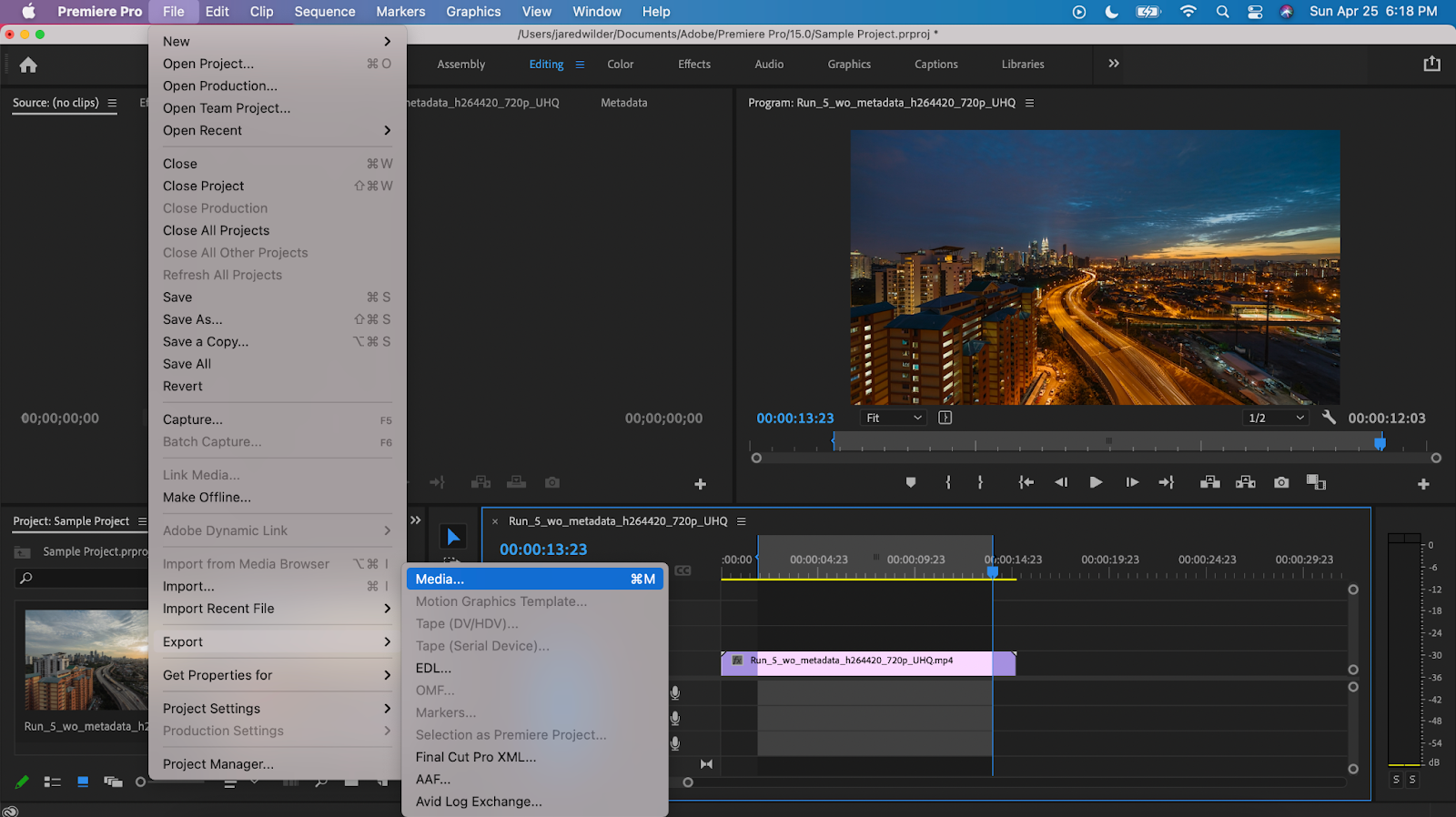
Now, navigate to the Export Menu. Press "File," curl down to "Export," and click "Media" to open the export menu. You lot can besides apply the "Command + M" (Mac) or "Control + M" (PC) shortcut to open up the menu.
3. Choose a Format, and Proper name Your File
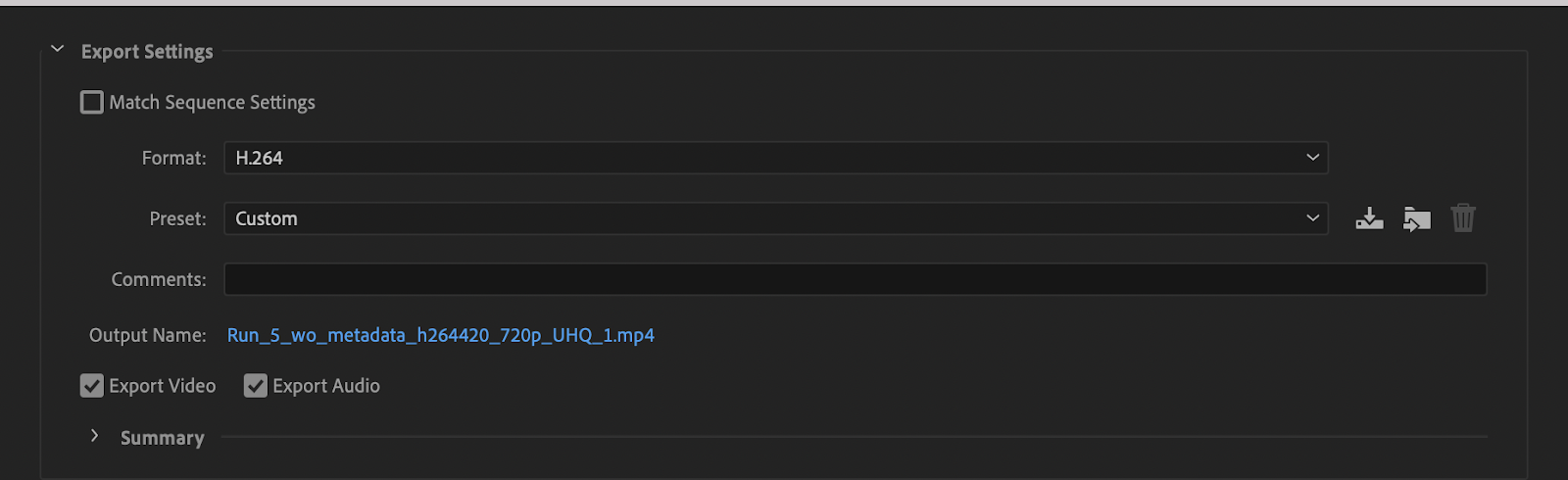
H.264 is the best format to export from Premiere Pro for YouTube. Select it from the list of options in the "Format" bar. Next, click on the "Output Name" and requite your file a name that you'll call up.
4. Configure "Basic Video Settings"
Resolution
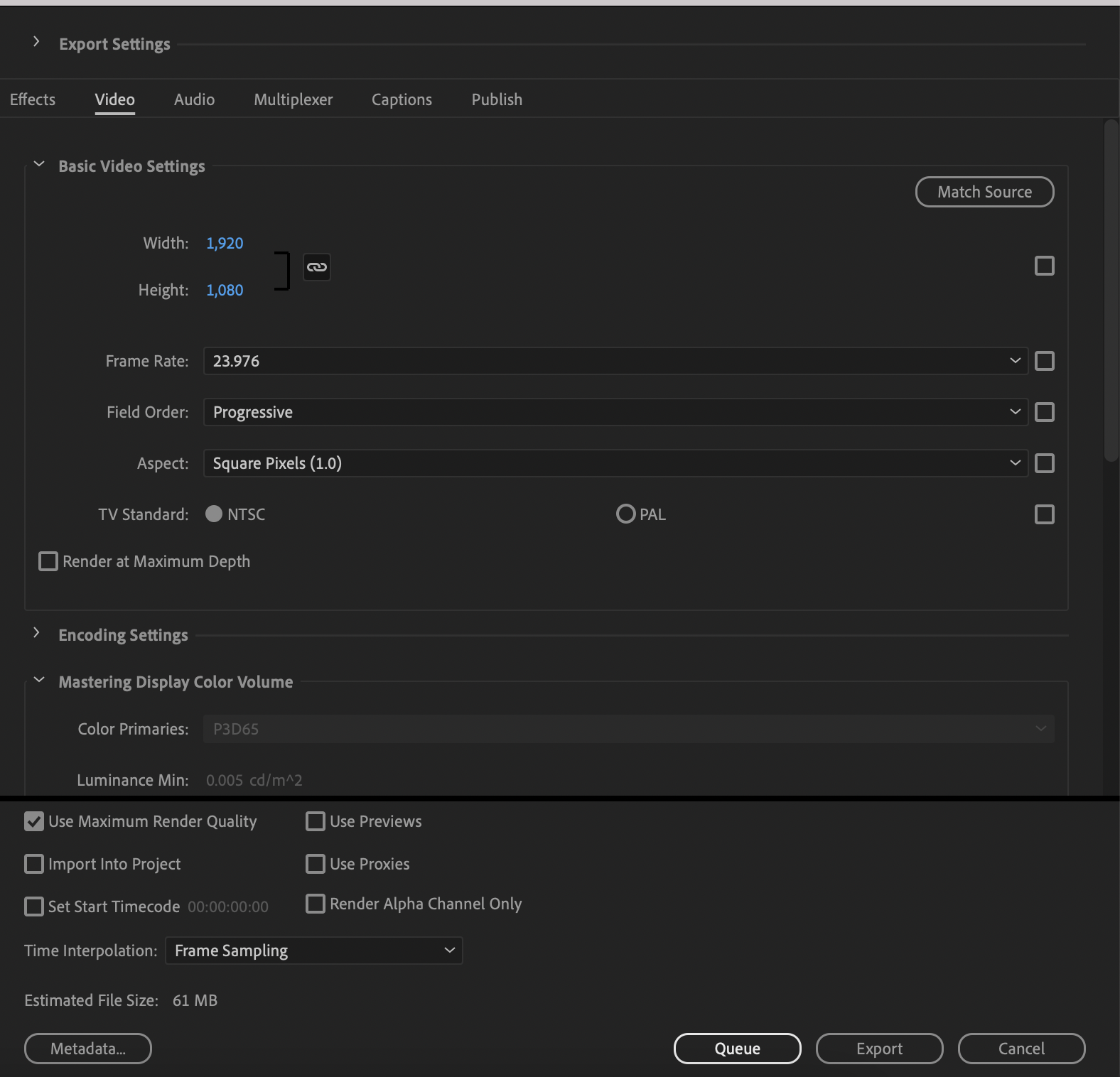
Choose a resolution that matches the resolution of the video yous shot. The bulk of the fourth dimension, this volition be 1920 X 1080, the resolution for HD video. If you shot in 4K, select 3840 10 2160. You can also check the box that says "Match Source" and Premiere will choose the resolution for you.
Frame Rate
If yous shot the video at a college frame rate, you might need to adjust to 30FPS, 60FPS, or another frame charge per unit that fits the frame rate y'all shot in. Premiere will automatically accept "23.976" selected; unless yous need to modify information technology, yous can leave that alone.
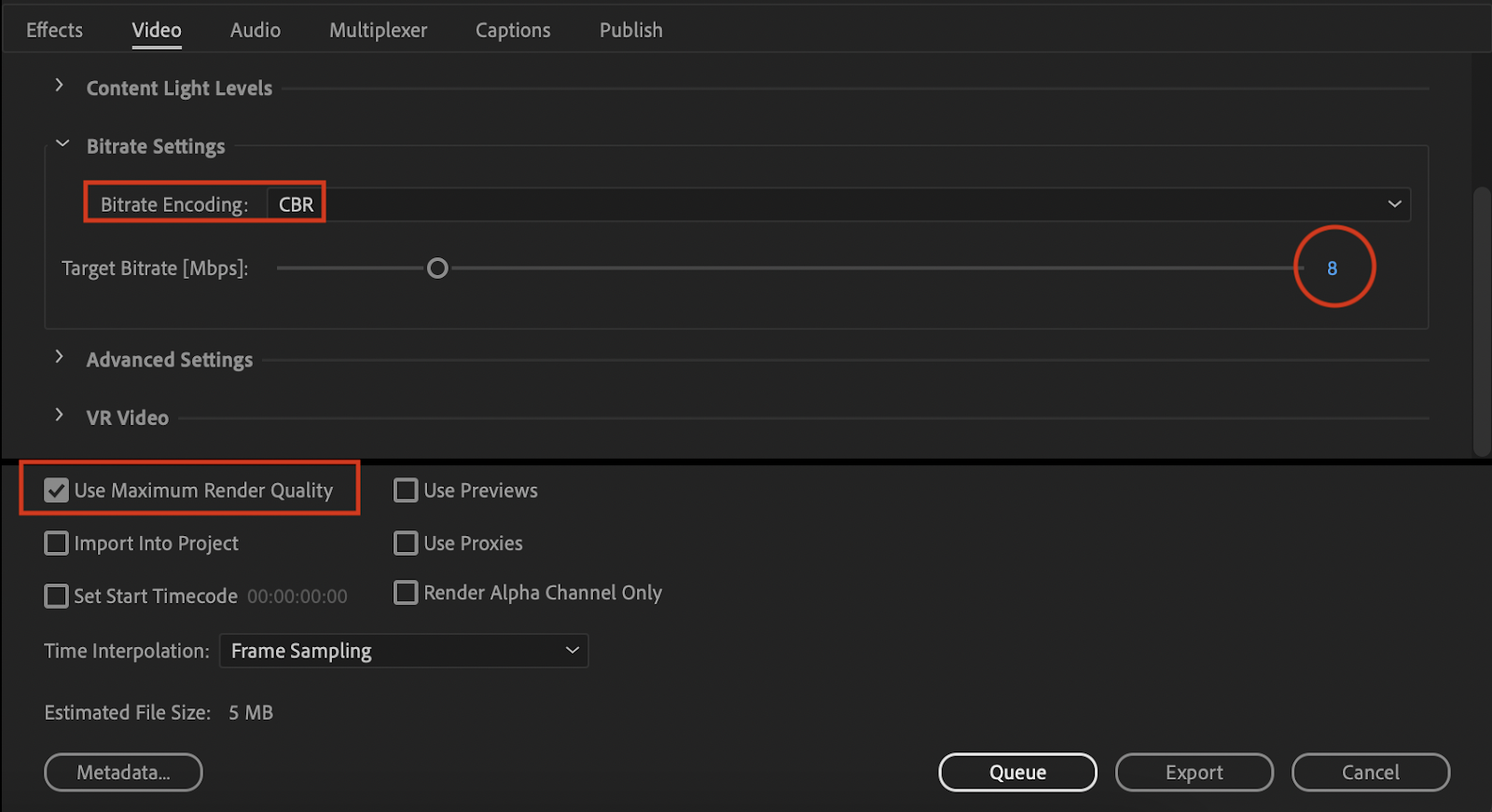
five. Configure "Bitrate Settings"
- Bitrate Encoding: Select "CBR", Constant Scrap Rate
- Target Bitrate: Click on the number next to the slider and type in "viii" (or "45" if you're exporting in 4K). If exporting at 1080P, 60FPS, choose 12 for target bitrate.
- Always Check "Use Maximum Render Quality": This will ensure that the video you export is of the highest possible quality, with the least compression.
half-dozen. Sound Consign Settings in Premiere Pro
We didn't spend much time on this because Premiere's default settings work perfectly with YouTube. Click "Audio" in the bill of fare bar and make sure that y'all see these numbers/selections:
- Audio Codec: AAC
- Sample Charge per unit: 48000 Hz
- Channels: Stereo
- Sound Quality: High
- Bitrate: 256
- Precedence: Bitrate
If you run into different settings on your screen, information technology's likely that Premiere has automatically matched it to the source sound. Even so, this is a pretty rare occurrence and it'southward easy to switch the audio settings to the above, which is best for YouTube.
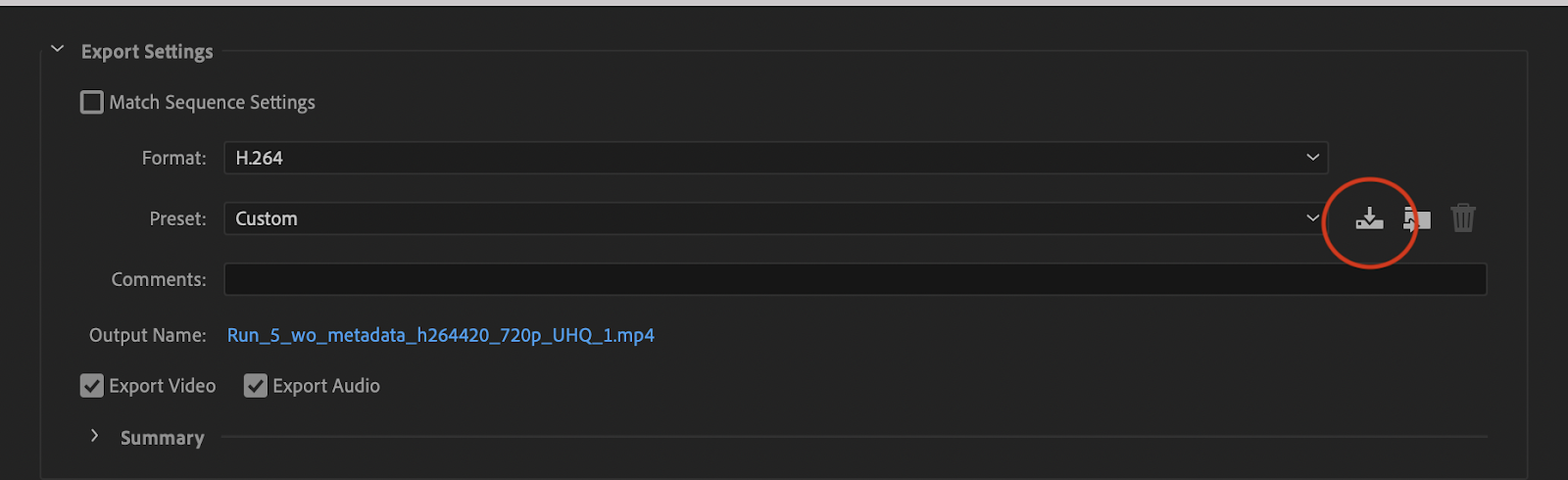
7. Save Your Export Settings for Adjacent Time
Before you press "Consign," scroll dorsum to the top of the consign settings menu. There is a button side by side to the "Presets" bar that will permit you relieve your settings. Relieve information technology with a name like "YouTube Standard." And so, all y'all accept to do next fourth dimension you export a video is choose that preset!
viii. Export and Upload Your Video
Your export piece of work is done! Press "export" and let Premiere work its magic! When the export is finished, the file will be saved on your computer's hard drive, ready for YouTube uploading.
How to Upload a Video to YouTube from Premiere Pro
Later on exporting your video from Premiere, head over to YouTube.
- Click the camera gear icon in the summit right (Create) and select Upload Video
- Drag your video file or locate it on your calculator
- Follow the remaining steps to upload and optimize your video's metadata
- Click Publish
Concluding Thoughts
Choosing the right export settings for YouTube in Premiere Pro CC is crucial in the video product process. If you empathise the basic terms and concepts, you can avoid fourth dimension-wasting mistakes and focus on growing your audience and client/customer base!
Do you have any questions for us almost Premiere Pro? Or, are you interested in taking a "hands-off" approach and letting us handle your business YouTube videos? Leave your comments below, and don't hesitate to get in touch on with u.s. today!
Source: https://newterritory.media/premiere-export-settings-for-youtube/
Posted by: mayoincents1958.blogspot.com
0 Response to "How To Export For Youtube In Premiere Pro"
Post a Comment